
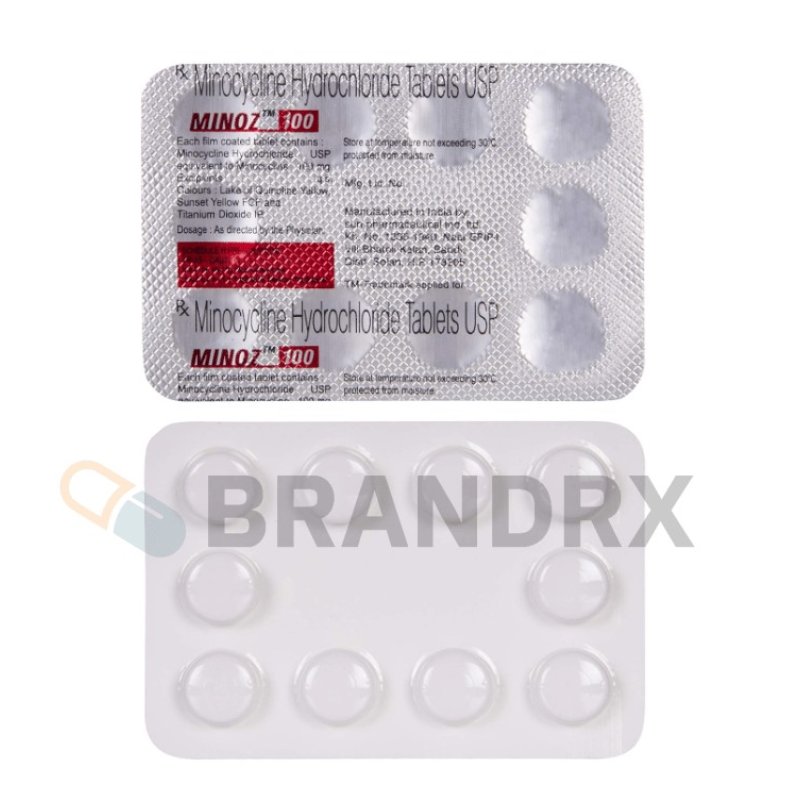
Minoz 100 mg Sun Pharmaceuticals Industries: Overview and Features
Minoz 100 mg Sun Pharmaceuticals Industries is a medication used primarily in the treatment of various bacterial infections. Its active ingredient, minocycline, belongs to a class of antibiotics known as tetracyclines, which work by inhibiting protein synthesis in bacteria, thereby stopping their growth. One of the key features of Minoz is its broad-spectrum activity against a wide range of gram-positive and gram-negative bacteria. This makes it effective in treating conditions such as acne, respiratory tract infections, and certain sexually transmitted infections.
The potency of Minoz 100 mg lies in its ability to penetrate tissues and fluids, including the central nervous system, which enhances its effectiveness in treating more challenging infections. Moreover, its relatively longer half-life allows for less frequent dosing, thereby improving patient adherence to the treatment regimen.
Forms and Types of Minoz 100 mg
Minoz 100 mg is predominantly available in oral capsule form, making it convenient for patients to ingest. The capsules are designed for easy swallowing and dissolution within the stomach, ensuring that the medication is absorbed efficiently into the bloodstream. While Minoz is primarily available as a capsule, other formulations may include oral suspensions or injections in certain cases, depending on the specific medical needs and the advice of healthcare professionals.
In addition to these forms, Minoz 100 mg is also characterized by its extended-release formulation, which provides a gradual release of the antibiotic into the bloodstream. This allows for improved effectiveness in maintaining therapeutic drug levels over time, which is crucial for treating chronic infections.
Minoz 100 mg Sun Pharmaceuticals Industries vs. Other Antibiotics
What sets Minoz 100 mg Sun Pharmaceuticals Industries apart from other antibiotics is its unique mechanism of action and pharmacokinetic properties. Unlike many other antibiotics that may target specific bacterial types or require multiple doses throughout the day, minocycline offers a broader spectrum of action along with the benefit of less frequent dosing due to its longer half-life.
Furthermore, Minoz is particularly effective against resistant strains of bacteria that often do not respond well to first-line antibiotics, making it an essential option for patients with treatment-resistant infections. Its ability to penetrate various body tissues enhances its efficacy in treating a range of conditions, including those affecting difficult-to-reach areas.
Long-Term Effects and Contraindications
The long-term use of Minoz 100 mg can lead to effective management of chronic infections, but certain precautions must be taken. It is essential to understand that this medication is not suitable for everyone. Pregnant women are advised against using minocycline, as it may affect fetal development. Similarly, children under the age of eight should not use this medication because of the risk of permanent discoloration of teeth and potential effects on bone growth.
Individuals with a known allergy to tetracyclines or those with severe liver or renal impairment should also avoid this antibiotic. It is crucial for patients to discuss their medical history with healthcare providers to ensure that Minoz is an appropriate choice for their specific condition.
Practical Advice for Using Minoz 100 mg Sun Pharmaceuticals Industries
When considering treatment with Minoz 100 mg Sun Pharmaceuticals Industries, it is vital to consult a healthcare professional first. They can provide tailored advice based on individual health needs and potential drug interactions. Starting the medication typically requires adherence to a prescribed dosage schedule, which may involve taking the capsules with or without food.
Additionally, patients should be aware of the importance of completing the full course of the antibiotic, even if symptoms improve before the treatment course is finished. This ensures the complete eradication of the infection and helps prevent the development of antibiotic resistance. Regular follow-up appointments may be necessary to monitor effectiveness and any potential side effects, ensuring a safe and effective treatment experience.
| Features | |
| Active substance | Minocycline |
| Also known as | Minomycin |
| Blood pressure | No significant impact |
| Chemical name | (4S,4aS,5aR,12aS)-4,7-Bis(dimethylamino)-3,10,12,12a-tetrahydroxy-1,11-dioxo-1,4,4a,5,5a,6,11,12a-octahydrotetracene-2-carboxamide |
| Dosage (medical) | 100-200 mg initially, then 100 mg every 12 hours |
| Dosage (sports) | Not applicable |
| Effects | Inhibits bacterial protein synthesis, anti-inflammatory properties |
| Formula | C23H27N3O7 |
| Half-life | 11-22 hours |
| Hepatotoxicity | Rare |
| Lab Test | Not specific |
| Main action | Antibacterial |
| Side effects | Dizziness, vertigo, nausea, diarrhea, discoloration of teeth, photosensitivity |
| Storage conditions | Store at room temperature, protect from light and moisture |
| Strength | 100mg |
| Substance class | Tetracycline antibiotic |
| Trade name | Minocin, Solodyn |
| Use in sports | Not typically used |
| Water Retention | No significant effect |
| Manufacturer | Sun Pharma Laboratories Ltd. |
| Packing | 10 tabs/blister |